Introduction: The AI Power Paradox and the Geothermal Imperative geothermal for ai
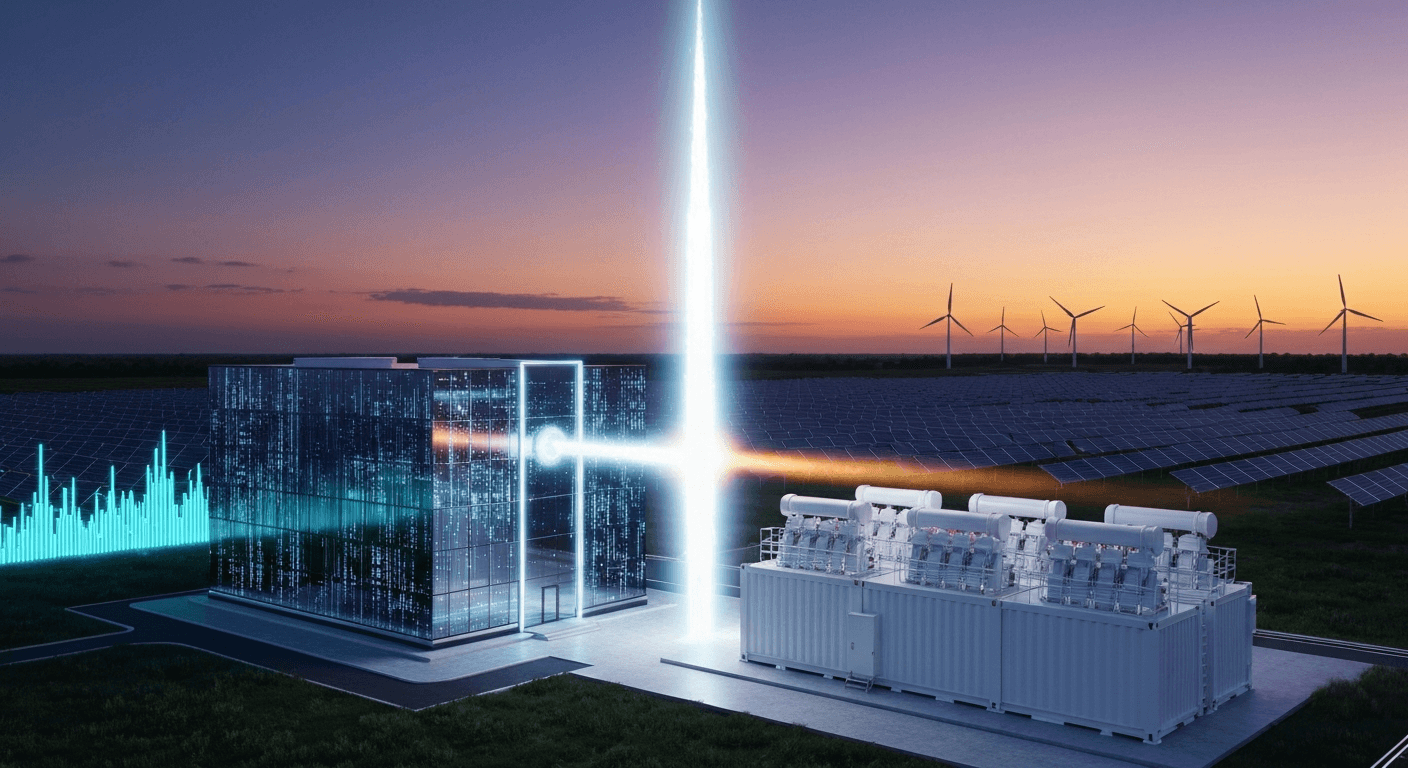
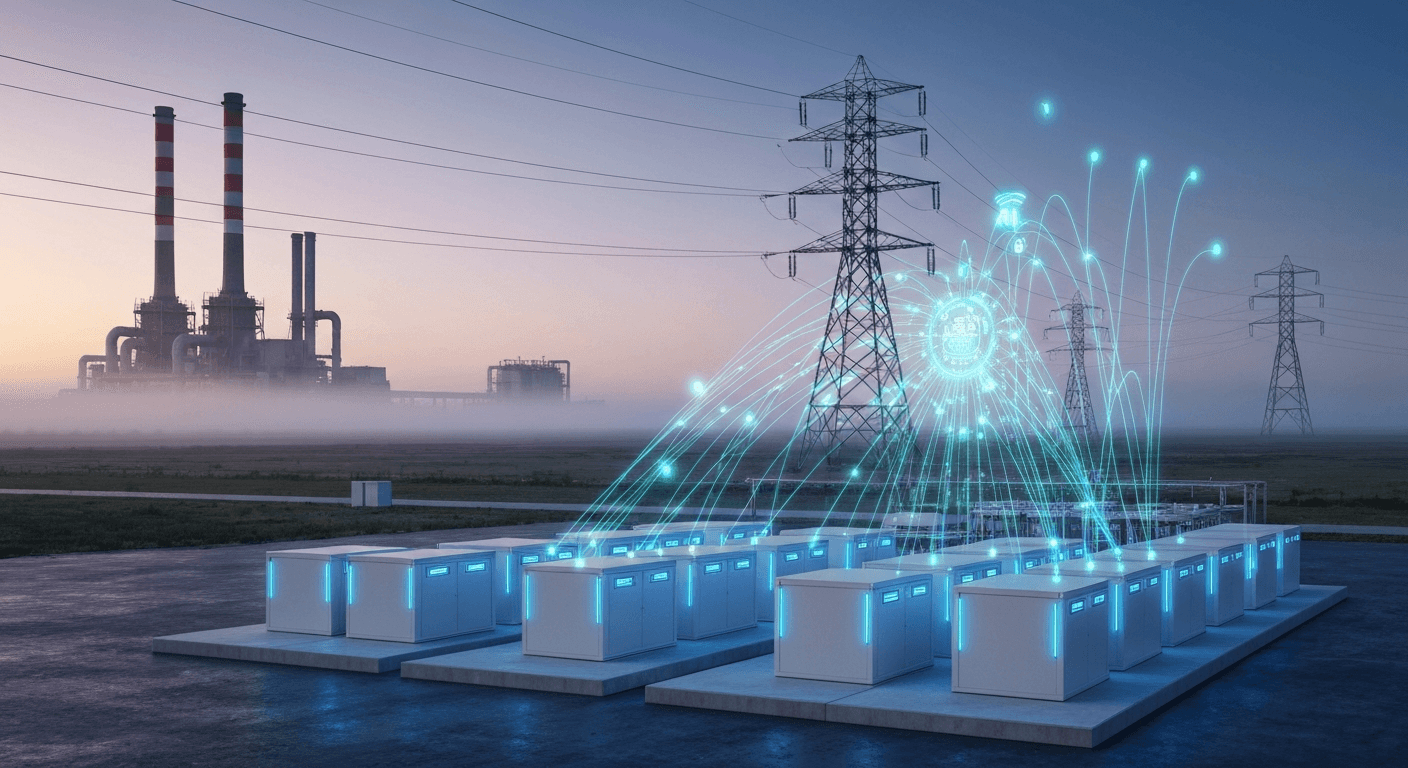
The exponential growth of artificial intelligence has created an insatiable demand for computational power, a demand that is rapidly outpacing traditional energy infrastructure. Moore’s Law, which once governed the predictable growth of computing efficiency, is being overshadowed by the brute-force energy requirements of training and running large language models and complex AI systems. This has fundamentally transformed data centers from passive storage warehouses into high-density “AI Factories” characterized by relentless, power-hungry computation. Legacy electrical grids, already strained and facing multi-year backlogs for new interconnections, are ill-equipped to handle these concentrated, multi-hundred-megawatt loads. Furthermore, intermittent renewables like solar and wind, while critical for decarbonization, cannot provide the 24/7, high-availability baseload power that an AI factory’s 99.99% uptime requirement demands. This creates an urgent need for a new power paradigm. This paper posits that geothermal energy is uniquely positioned not just as a green alternative, but as the most strategic, reliable, and economically sound power and cooling solution for the AI revolution. It serves as a technoeconomic guide for the engineers, developers, and contractors tasked with building the critical infrastructure of our computational future, demonstrating the tangible viability and implementation pathways for geothermal-powered AI.
AI Factory Power Load Breakdown
Typical Power Distribution
Compute (GPUs/CPUs): 55%
Cooling Systems: 35%
Other (Network, Loss): 10%
Grid Interconnection Challenge
Years Average Wait Time
for large-load grid connection approval and build-out.
Section 1: Quantifying the AI Factory Energy Challenge
The power profile of a modern AI factory is a brutal testament to high-density computing. Unlike traditional data centers, where server utilization fluctuates, AI training clusters operate at near-maximum capacity for extended periods, creating a massive and relentless baseload demand. This load is broadly split between the computational hardware (GPUs, CPUs, networking) and the critical cooling infrastructure required to manage its thermal output, with cooling often accounting for 30-40% of the total energy budget. This dynamic renders traditional Power Usage Effectiveness (PUE) metrics insufficient; a PUE of 1.4 is no longer acceptable when the baseline power draw is 200 MW. The industry now requires a constant, unwavering power supply, demanding 99.99% uptime that intermittent resources cannot guarantee without prohibitively expensive battery storage. Compounding this issue are severe grid interconnection bottlenecks. Developers of large-scale AI facilities are now facing multi-year queues and astronomical interconnection costs, sometimes exceeding hundreds of millions of dollars, just to access grid power (Source: Lawrence Berkeley National Laboratory – lbl.gov). Simultaneously, the thermal densities of modern AI accelerators have surpassed the capabilities of conventional air cooling, forcing a shift to direct liquid cooling (DLC). This solves the chip-level heat problem but creates a new, larger challenge: rejecting immense amounts of heat from the facility-level water loop, a task for which traditional cooling towers are often inefficient and water-intensive.
Geothermal vs. Renewables: Capacity Factor
Solar PV
~25%
Onshore Wind
~35%
Geothermal
95%+ Baseload
Section 2: Geothermal for the Infrastructure Professional: Beyond the Basics
For engineers and developers, understanding the nuances of modern geothermal technology is crucial. It is no longer limited to conventional hydrothermal systems that tap into naturally occurring hot water reservoirs. The two transformative technologies are Enhanced Geothermal Systems (EGS) and Advanced Geothermal Systems (AGS), often called closed-loop. EGS leverages drilling and reservoir stimulation techniques from the oil and gas industry to create permeable rock reservoirs where they don’t naturally exist, dramatically expanding geographic feasibility. AGS circulates a working fluid through deep, sealed underground pipes, acting as a massive downhole heat exchanger without fluid interaction with the rock. The single most important performance metric is Capacity Factor—the ratio of actual energy output over a period to the maximum possible output. Geothermal power plants routinely achieve capacity factors exceeding 95%, providing true 24/7 baseload power. This stands in stark contrast to utility-scale solar (~25%) and onshore wind (~35%), which are intermittent by nature. A key engineering benefit is the dual-use potential: the same system provides high-availability electricity while its residual heat or cooling capacity can be directly integrated into the AI factory’s thermal management, offering a powerful synergy. As advanced drilling technologies unlock geothermal resources globally, the land footprint efficiency—often delivering over 20 times more MW per acre than a sprawling solar farm—makes it an ideal solution for dense infrastructure projects.
Integrated Geothermal-AI Factory Loop
Geothermal Well
Hot fluid is extracted.
Power Plant
Electricity is generated for AI Factory.
Cooling Loop
Cooled geothermal fluid rejects heat from AI servers.
Re-injection
Fluid returns to reservoir.
Section 3: The Unbeatable Synergy: Engineering the Geothermal-Powered AI Factory
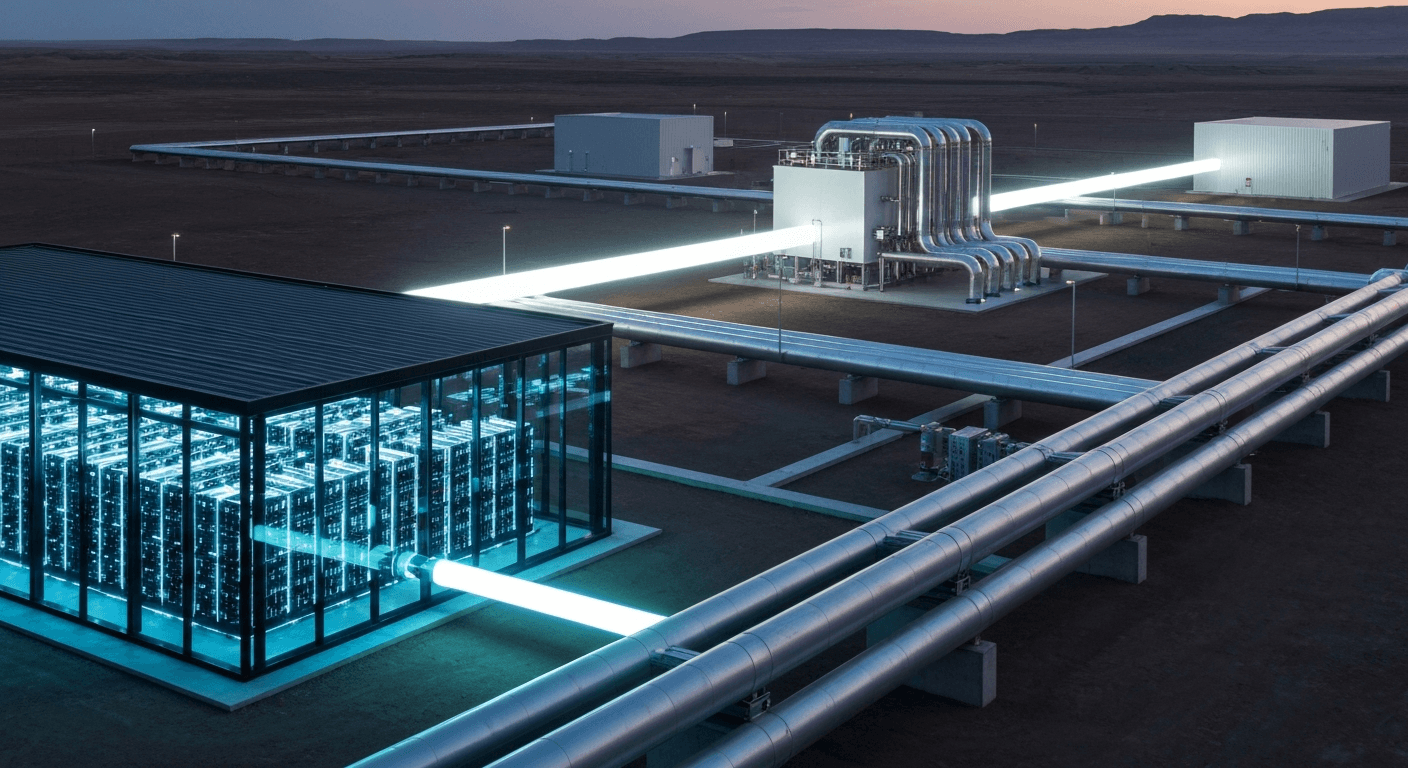
The engineering elegance of a geothermal-powered AI factory lies in its perfect load-matching and integrated design. Geothermal power’s flat, continuous generation profile is an ideal match for the relentless, high-capacity-factor demand of AI compute clusters, eliminating the need for complex and costly energy storage solutions. By co-locating the power generation source with the load, developers can bypass the constrained transmission grid entirely, eliminating transmission losses, interconnection fees, and grid-related delays. The most profound synergy, however, is in the cooling loop. Post-generation, the geothermal fluid—now cooled but still containing significant thermal energy—can be routed through heat exchangers. This creates a highly efficient primary loop for the AI factory’s liquid cooling system, absorbing the waste heat from server racks before the geothermal fluid is re-injected underground. This process can slash the facility’s PUE to below 1.1, a level of efficiency unattainable with conventional air or water-cooling towers. From a risk management perspective, this on-site generation model insulates the multi-billion-dollar AI asset from grid volatility, blackout risks, and fluctuating electricity prices. Architecturally, the integrated campus functions as a self-sufficient microgrid, with unparalleled reliability that can be further enhanced with standard backup systems like UPS and minimal on-site generators for triple redundancy.
Technoeconomic Profile: Geothermal for AI
Capital (CAPEX)
High
(Exploration, Drilling, Plant Construction)
Operations (OPEX)
Very Low
(Zero Fuel Cost, Predictable Maintenance)
LCOE (Baseload)
Competitive
(Outcompetes Solar+Storage & Grid for 24/7 loads)
Section 4: A Deep Dive into the Technoeconomics of Geothermal for AI
The business case for geothermal-powered AI hinges on a long-term view that prioritizes operational certainty over initial capital. The Capital Expenditure (CAPEX) is undeniably high, dominated by geological exploration, deep drilling, and power plant construction. However, this is balanced by an exceptionally low and predictable Operational Expenditure (OPEX) profile, driven by the complete absence of fuel costs. This fundamentally de-risks the long-term operational budget from volatile natural gas prices or complex grid tariffs. When modeled for a high-capacity-factor AI application, the Levelized Cost of Energy (LCOE) for geothermal becomes highly competitive, often falling below the all-in cost of grid power (which includes demand charges and transmission fees) and significantly undercutting the LCOE of a solar-plus-battery system designed for 24/7 reliability. The financial model is further enhanced by powerful incentives. The U.S. Inflation Reduction Act (IRA) offers a transformative Production Tax Credit (PTC) or Investment Tax Credit (ITC) for geothermal projects, which can reduce the LCOE by 30-40% (Source: U.S. Department of Energy – energy.gov). This federal incentive can be stacked with local data center tax abatements. Furthermore, revenue can be increased by selling excess power and ancillary services to the grid. To mitigate the primary obstacle—geological exploration risk—project financing models are evolving, with insurance products and phased investment tranches tied to successful well tests. Firm, long-term Power Purchase Agreements (PPAs) from the AI factory operator provide the revenue certainty needed to secure project financing for the entire integrated campus.
Co-Located Project Implementation Pathway
Section 5: Key Implementation & Engineering Considerations
Successfully executing a geothermal-powered AI factory requires a multidisciplinary approach that merges subsurface geology with facility engineering. The process begins with a new site selection paradigm, where GIS layers for heat flow and favorable geology are overlaid with data on fiber optic routes, water availability, and transportation logistics. The critical path then moves to drilling and reservoir management. This phase heavily relies on technology transfer from the oil and gas industry, using advanced horizontal drilling, real-time monitoring (LWD/MWD), and hydraulic stimulation techniques to precisely engineer the geothermal reservoir for optimal flow and heat extraction. Electrical engineers are tasked with designing the direct connection from the geothermal power plant to the AI factory’s medium-voltage switchgear, focusing on power quality, harmonics, and fault protection to safeguard sensitive IT equipment. Concurrently, mechanical and HVAC engineers must model and design the integrated cooling system, specifying high-efficiency heat exchangers and piping to link the geothermal loop with the facility’s liquid cooling distribution. Professionals looking to deepen their expertise in these integrated designs can access specialized case studies and engineering resources by registering for industry knowledge platforms. For project managers, navigating the regulatory and permitting pathways for a co-located project requires early and coordinated engagement with authorities governing both energy production and industrial construction, aiming to streamline what can be two separate and complex processes. Accessing detailed engineering specifications and connecting with certified professionals can be streamlined through dedicated industry portals such as https://jisenergy.com/sign-up-login/.
Case Study: 250 MW Geothermal AI Factory (EGS)
Phase 1 (18-24 mo)
Resource Validation
Phase 2 (24-36 mo)
Drilling & Construction
Phase 3 (12 mo)
Systems Integration
<1.1
Projected PUE
$65/MWh
Target LCOE
<8 Years
Payback Period
Section 6: Practical Application Blueprint: A Hypothetical Case Study
Consider the development of a 250 MW AI factory in the Permian Basin of West Texas, a region with favorable geology for EGS but not traditionally known for geothermal power. The project unfolds in distinct phases. Phase 1 (Geological Survey & Validation) involves seismic imaging and drilling a stratigraphic test well to confirm temperature gradients and rock properties, de-risking the project for investors. Phase 2 (Power Plant & Infrastructure Development) proceeds upon successful validation. This is a multi-year effort involving drilling the full array of production and injection wells while concurrently constructing the binary-cycle geothermal power plant and the core and shell of the AI factory. Phase 3 (AI Factory Construction & Systems Integration) involves the installation of server racks, networking, and the mechanical integration of the facility’s liquid cooling loop with the geothermal plant’s heat rejection system. The projected financials for such a project are compelling. With IRA tax credits, the LCOE is estimated at $60-$70/MWh, a stable, 20-year price that insulates the operator from volatile wholesale electricity markets. The direct-use cooling synergy is projected to lower the PUE from a grid-powered standard of ~1.5 to below 1.1, yielding massive operational savings. The 20-year ROI is superior to grid-powered alternatives due to zero fuel costs and extreme operational efficiency. This hypothetical is rapidly becoming reality, as demonstrated by pioneering partnerships like Fervo Energy’s project to power Google’s data centers in Nevada, proving the technical and commercial viability of this integrated model (Source: Fervo Energy News – fervoenergy.com).
Conclusion: Building the Future of Digital and Energy Infrastructure
The convergence of AI’s exponential energy demand and geothermal energy’s unique attributes marks a pivotal moment for digital and energy infrastructure. We are witnessing a paradigm shift away from the traditional model of data centers as passive consumers of grid power, towards the creation of fully integrated energy and compute campuses. This evolution is not just an opportunity but a necessity to sustainably power the future.
For Engineering, Procurement, and Construction (EPC) firms, developers, and engineers, the call to action is clear: build multidisciplinary expertise that spans subsurface geology, power engineering, and high-density data center design. This requires investing in new talent, forging new partnerships, and embracing technologies transferred from the oil and gas sector. The geothermal-AI synergy provides a blueprint for powering not only the current AI boom but also the next generation of energy-intensive industries, from advanced manufacturing to green hydrogen production. Ultimately, deploying geothermal for AI is the most resilient, cost-predictable, and scalable solution for sustainably meeting the computational demands of the next century, laying the foundation for a new era of industrial and technological progress.