The AI Power Paradox
AI
Exponential Growth
GW
Unprecedented Power Demand
?
The Search for a Reliable Bridge
Introduction: The Unprecedented Energy Challenge of the AI Revolution
The rapid proliferation of artificial intelligence, from large language models to generative design, represents a step-change in computational demand, and consequently, a seismic shift in energy consumption. Hyperscale data centers, the digital factories of the AI era, are no longer passive consumers of electricity; they are voracious, mission-critical load centers whose power requirements are projected to grow exponentially. Projections from the International Energy Agency suggest that by 2026, data centers could consume over 1,000 TWh globally, an amount roughly equivalent to the entire electricity consumption of Japan (Source: iea.org). This surge creates an infrastructure challenge of a scale not seen since the industrial revolution. The existing electrical grid, often built decades ago for a different load paradigm, is ill-equipped to handle the speed, scale, and reliability requirements of these new digital behemoths. This gap between AI’s insatiable energy appetite and the grid’s capacity to deliver has created a critical inflection point, demanding a new approach to power generation that is both pragmatic and forward-looking. Developers and operators face the urgent task of sourcing gigawatts of new, reliable power on timelines far shorter than traditional utility planning cycles.
The AI Energy Trilemma
Reliability
Sustainability
Cost
The AI Energy Trilemma: Balancing Reliability, Sustainability, and Cost for Hyperscale Computing
Powering the AI revolution forces operators into a complex optimization problem known as the energy trilemma, amplified to an unprecedented degree. The three competing vertices are absolute reliability, ambitious sustainability goals, and stringent economic viability. For an AI data center, reliability is non-negotiable; uptime measured in “five nines” (99.999%) is the baseline expectation, as even milliseconds of disruption can corrupt complex training models and result in millions of dollars in losses. Simultaneously, hyperscale operators are among the world’s largest corporate buyers of renewable energy, driven by ESG mandates and customer expectations to achieve net-zero emissions. This creates a direct conflict, as the intermittent nature of solar and wind power is fundamentally at odds with the need for constant, 24/7/365 power. The third vertex, cost, governs all decisions. While the capital is available to overbuild renewable generation and massive battery storage systems, the resulting Levelized Cost of Energy (LCOE) can be prohibitive, threatening the business model of the data center itself. Successfully navigating this trilemma requires a solution that can guarantee uptime and integrate with renewables at a cost-competitive price point, a role traditional baseload or simple renewable-only solutions struggle to fill.
☀️💨
Intermittent
Renewables
The Bridge
Flexible Gas Generation
🤖🖥️
24/7 AI
Data Centers
Thesis: Why Flexible Gas Generation is the Critical, Pragmatic Bridge to Powering AI’s Future
To resolve the AI energy trilemma, flexible natural gas generation emerges not as a permanent solution, but as the indispensable bridging technology for the next 15-20 years. This approach is rooted in pragmatism, acknowledging the physical and economic limitations of a 100% renewable-plus-storage model in the near term. Flexible gas plants, specifically those utilizing modern reciprocating engines or aeroderivative turbines, provide the firm, dispatchable capacity required to guarantee 99.999% uptime when intermittent renewables are unavailable. They act as a critical insurance policy against the variability of wind and solar, firming up Power Purchase Agreements (PPAs) and enabling the deeper penetration of renewables onto the grid without compromising reliability. This is not a vote against renewables; rather, it is a strategy to accelerate their deployment by providing the necessary stability and backstop. By co-locating flexible gas assets with data centers, developers can bypass congested transmission networks and lengthy interconnection queues, dramatically accelerating time-to-market. This strategy provides the operational certainty needed for multi-billion-dollar AI investments while charting a clear decarbonization pathway through future fuel conversions to hydrogen and renewable natural gas (RNG).
Generation Technology Spectrum
Baseload (CCGT/Nuclear)
Response: Slow (Hours/Days)
Role: Constant Output
Efficiency: High at full load
Flexible Generation (RICE/Aero)
Response: Ultra-Fast (Seconds/Minutes)
Role: Follows Load/Renewables
Efficiency: High across load range
Peaker (Simple Cycle)
Response: Fast (10-15 Mins)
Role: Infrequent Peak Shaving
Efficiency: Low, especially at part load
Defining “Flexible Gas Generation”: Beyond Traditional Baseload Power
It is crucial to differentiate “flexible gas generation” from its conventional counterparts. Unlike large-scale combined-cycle gas turbine (CCGT) plants designed for baseload operation—providing steady, constant power over long durations—flexible generation is engineered for agility and rapid response. The core mission of these assets is not to run 24/7, but to instantaneously react to changes in grid conditions, renewable energy output, or data center load. This category is dominated by two primary technologies: Reciprocating Internal Combustion Engines (RICE) and aeroderivative gas turbines. RICE plants, often modular in 10-20 MW blocks, can go from a standstill to full power in under 30 seconds, offering unparalleled speed and high efficiency even at partial loads. Aeroderivative turbines, derived from jet engine technology, offer greater power density (30-100+ MW) and can ramp to full capacity in minutes. This operational profile is the antithesis of a traditional peaker plant, which, while also dispatchable, is typically less efficient, has slower start times (10-15 minutes), and is designed to run only a few hundred hours a year during extreme peak demand. Flexible generation, by contrast, is a dynamic tool designed to operate for thousands of hours annually, precisely firming renewables and sculpting power supply to meet the volatile demands of AI workloads.
Section 1: The AI Data Center Power Demand Profile: A New Paradigm
AI Data Center Load Characteristics
GW
Gigawatt Scale
Single campuses demanding 500 MW to over 1 GW of capacity.
99.999%
Extreme Reliability
Requires uninterruptible, high-quality power to prevent model corruption.
Spiky
Variable Load
Sudden load swings between AI training (high) and inference (low) cycles.
Gridlock
Geographic Strain
Concentrated in areas with limited grid capacity and long queues.
Quantifying the Surge: From Megawatts to Gigawatts
The power demand from the AI sector is not an incremental increase; it is a step-function change in scale. A decade ago, a large data center might have a nameplate capacity of 30-50 megawatts (MW). Today, hyperscale campuses dedicated to AI model training are being planned and built with day-one demands of 200-500 MW, scaling rapidly to over 1,000 MW, or one gigawatt (GW)—the output of a large nuclear reactor. This concentration of load in a single geographical footprint is unprecedented. Virginia’s “Data Center Alley,” for example, already consumes a significant portion of the state’s electricity, and planned expansions are straining the regional grid to its breaking point. This is not just a forecast; it is a present-day reality, with utility providers in states like Georgia, Arizona, and Ohio publicly stating their inability to meet projected demand with existing infrastructure and generation assets, leading to moratoriums on new connections.
Beyond Kilowatt-Hours: The Critical Need for 99.999% Uptime and Power Quality
For AI data centers, the conversation about power transcends mere energy volume (kWh). The primary technical requirement is power quality and unwavering reliability, quantified by the industry benchmark of “five nines” or 99.999% uptime. This translates to less than 5.26 minutes of downtime per year. A momentary voltage sag, frequency deviation, or micro-outage that would go unnoticed in a commercial building can be catastrophic for an AI workload, potentially corrupting a weeks-long model training run and costing millions in wasted compute cycles and engineering time. Consequently, data centers require power that is not only constant but also exceptionally clean—free from harmonics, transients, and other disturbances. Traditional backup solutions like diesel generators and uninterruptible power supply (UPS) systems are designed for emergencies, not for managing the daily volatility of a renewable-heavy grid. This necessitates a primary power solution that can provide grid-forming, high-inertia power on-site, acting as a buffer against grid instability.
Characterizing the Load: Spiky, Concentrated, and Geographically Constrained
The load profile of an AI data center is fundamentally different from traditional industrial or residential loads. While there is a significant baseload component for cooling and basic server operation, the computational load itself can be extremely “spiky.” A facility can swing by hundreds of megawatts in minutes as massive AI training jobs are initiated or completed. This high ramp-rate requirement is a challenge for slower-reacting grid assets. Furthermore, this massive, spiky load is geographically concentrated. Data centers cluster in specific regions due to factors like fiber optic availability, favorable tax policies, and skilled labor. This creates “load pockets”—areas where local power demand vastly exceeds the transmission capacity available to import power from other regions, creating a bottleneck that can only be solved by building generation capacity directly within that pocket. This geographical constraint severely limits the ability to rely solely on remote, utility-scale renewable projects.
Grid Impact: Transmission Bottlenecks, Interconnection Queues, and Regional Instability
The concentrated gigawatt-scale demand of AI is exposing and exacerbating long-standing weaknesses in the national power grid. The most significant barrier is transmission. Building new high-voltage transmission lines is a notoriously slow and expensive process, often taking over a decade due to permitting, land acquisition, and regulatory hurdles. As a result, even in regions with abundant renewable resources, the physical wires to transport that power to data center hubs do not exist. This leads to massive interconnection queues, where new generation and load projects wait for years to be studied and approved for connection to the grid. A recent study from Lawrence Berkeley National Laboratory highlights that nearly 2,600 GW of generation and storage are currently waiting in these queues—more than double the capacity of the entire existing U.S. power plant fleet (Source: emp.lbl.gov). This gridlock makes relying on utility-scale renewables a high-risk, long-timeline strategy, driving developers to seek on-site or “behind-the-meter” generation solutions that can operate independently of these constraints.
Section 2: Core Technologies in Flexible Gas Generation
Flexible Generation Technology Showdown
RICE
Start-up: < 30 seconds
Ramp Rate: Extremely High
Part-Load Efficiency: Excellent
Best For: Modularity, Grid Stability
Aeroderivative Turbine
Start-up: < 5 minutes
Ramp Rate: Very High
Part-Load Efficiency: Good
Best For: High Power Density
Reciprocating Internal Combustion Engines (RICE): Modularity and Rapid Response
Reciprocating Internal Combustion Engines (RICE) represent the pinnacle of operational flexibility and rapid response. Packaged in modular, containerized units (typically 10-20 MW each), RICE power plants can be scaled precisely to match a data center’s load growth. Their defining characteristic is speed: they can synchronize to the grid and reach full power in under 30 seconds. This near-instantaneous response capability is critical for providing grid services like frequency regulation and for immediately picking up load if grid power is lost or a renewable source drops offline. Unlike traditional turbines, RICE maintain very high efficiency even when operating at partial loads (e.g., 50% capacity), which is a common scenario when they are used to balance intermittent renewables. This flat efficiency curve ensures that fuel is not wasted during periods of lower output, making them economically superior for applications with highly variable duty cycles.
Aeroderivative Gas Turbines: High Power Density and Fast Ramping
Aeroderivative gas turbines are essentially jet engines modified for ground-based power generation. This heritage gives them a significant advantage in power density, meaning they can produce more megawatts per square foot of plant footprint compared to other technologies. A single aeroderivative unit can generate anywhere from 30 MW to over 100 MW. While not as fast as RICE from a dead stop, they are still exceptionally quick, capable of a full-power start in under five minutes. Their key strength lies in their rapid ramping capability once online; they can increase or decrease their output by tens of megawatts per minute, making them ideal for following large, predictable shifts in net load, such as the morning ramp-up or evening drop-off of solar generation. This makes them a powerful tool for firming large-scale renewable PPAs and managing grid-level supply and demand imbalances.
Key Performance Metrics: Start-up Time, Ramp Rate, and Part-Load Efficiency
When evaluating flexible generation technologies, three key performance metrics (KPMs) are paramount. Start-up Time is the duration from a start signal to full power output; for flexible applications, this must be measured in seconds to minutes, not hours. Ramp Rate, typically expressed in MW/minute, is the speed at which a unit can change its output once synchronized to the grid. High ramp rates are essential for tracking the volatility of both AI loads and renewable generation. Finally, Part-Load Efficiency is arguably the most critical economic driver. Since these plants spend much of their time operating at less than 100% capacity to fill the gaps left by renewables, a flat efficiency curve (like that of RICE) ensures low fuel consumption and cost-effective operation across a wide range of operating scenarios. An asset with poor part-load efficiency becomes prohibitively expensive to run in a renewables-balancing role.
Comparing Flexible Gas with Traditional Peaker Plants and Baseload Generation
The operational philosophy of flexible gas generation places it in a distinct category from both traditional peaker and baseload plants. Baseload plants (nuclear, coal, CCGT) are designed for efficiency at a constant, high output and lack the ability to start or ramp quickly. They are the marathon runners of the grid. Old-school peaker plants (simple-cycle frame turbines) are the sprinters, but they are inefficient, have higher emissions rates, and can only run for short durations. Flexible gas assets are the decathletes of the power world. They combine the rapid start and ramping capabilities needed for sprinting with the high efficiency and durability required to operate for thousands of hours per year, flexibly adapting their output to provide whatever service the grid or the data center needs at any given moment. This versatility is what makes them uniquely suited to bridge the gap in a modern, dynamic energy system.
Section 3: The Economic Analysis: Deconstructing the Value Stack for Project Developers
Flexible Gas Project Value Stack
Ancillary Services
Frequency Response, Spinning Reserves
Capacity Market Revenue
Payments for being available
Energy Arbitrage
Selling power during high price spikes
Reliability Value (LCOR)
Cost avoidance of data center downtime
Capital Expenditure (CapEx) Comparison: $/kW Analysis of Flexible Gas vs. Solar-plus-Storage
From a pure CapEx perspective, flexible gas generation presents a compelling case for project developers. On a dollar-per-kilowatt ($/kW) basis, a modern RICE or aeroderivative gas plant typically has an installed cost between $800-$1,200/kW. In contrast, a solar-plus-storage project designed to provide a comparable level of firm, 24/7 reliability requires significant overbuilding of both solar capacity and battery duration. A lithium-ion Battery Energy Storage System (BESS) capable of providing multiple hours of firm capacity can add $400-$600/kWh to the project cost. To guarantee power through multi-day periods of low sun (e.g., winter storms), the required solar and storage capacity can drive the effective firm $/kW cost well above $2,500-$3,000/kW. While solar and BESS costs are declining, for the immediate needs of gigawatt-scale AI, the upfront capital required for a truly reliable renewable solution is often 2-3 times higher than for a flexible gas plant, making the latter a more capital-efficient choice for achieving near-term operational goals.
Operational Expenditure (OpEx) Modeling: Fuel Costs, O&M, and Carbon Pricing
The OpEx model for flexible gas is dominated by three factors: fuel cost, operations and maintenance (O&M), and carbon pricing. Natural gas prices can be volatile, but long-term hedging strategies and direct pipeline access can mitigate this risk. Modern flexible plants have high thermal efficiencies (45-50%), minimizing fuel consumption per MWh generated. O&M costs are predictable and are often managed through long-term service agreements (LTSAs) with the original equipment manufacturer (OEM). The most significant variable is the evolving cost of carbon. As carbon taxes or emissions trading schemes are implemented, they add a direct cost to operations. However, this must be weighed against the high capital and replacement costs of BESS (which have a 10-15 year lifespan) and the cost of purchasing replacement power on the spot market during periods of low renewable generation, which can be extremely high. For behind-the-meter applications, the OpEx of the gas plant is benchmarked against the utility’s retail electricity rate, which often includes high demand charges that on-site generation can eliminate.
Levelized Cost of Energy (LCOE) vs. Levelized Cost of Reliability (LCOR)
Relying solely on LCOE for technology comparison is misleading in the context of mission-critical facilities. LCOE measures the average cost to produce a kilowatt-hour, heavily favoring intermittent renewables like solar ($25-35/MWh) over dispatchable gas ($60-80/MWh). However, AI data centers do not buy average kilowatt-hours; they buy guaranteed, 24/7 power. A more appropriate metric is the Levelized Cost of Reliability (LCOR), which calculates the total system cost—including generation, storage, and firming capacity—required to meet a specific reliability target (e.g., 99.999%). When LCOR is calculated, the cost of a solar-only system skyrockets due to the massive BESS and overbuild required to ensure continuous power. The hybrid system, combining a renewable PPA with on-site flexible gas, often yields a significantly lower LCOR, providing the most cost-effective path to achieving the required uptime. This metric internalizes the “insurance value” of dispatchable generation.
Unlocking New Revenue Streams: Ancillary Services, Capacity Markets, and Grid Services
A key advantage of flexible gas plants is their ability to generate revenue even when not providing energy to the data center. Their rapid-response capabilities make them highly valuable assets in organized power markets. They can participate in ancillary service markets, getting paid for providing frequency regulation, spinning reserves, and non-spinning reserves that help stabilize the grid. In regions with capacity markets (like PJM or ISO-NE), these plants can earn significant revenue simply for being available to generate during peak demand periods, even if they are never dispatched. For project developers, this “value stacking” is critical. These external revenue streams can offset a significant portion of the plant’s fixed costs and fuel expenses, effectively lowering the net cost of power delivered to the host data center. This turns a reliability asset into a revenue-generating profit center, dramatically improving the project’s overall ROI. Detailed market analysis is crucial here, and energy professionals often rely on specialized platforms providing up-to-date market intelligence to accurately model these revenue streams; for further insight on market data, you can visit https://jisenergy.com/sign-up-login/.
Return on Investment (ROI) Profile for Behind-the-Meter and Grid-Scale Applications
The ROI for a flexible gas project depends heavily on its application. For a behind-the-meter (BTM) project directly serving a data center, the primary return is derived from cost avoidance. This includes avoiding the high retail electricity rates and demand charges from the local utility, and, most importantly, eliminating the catastrophic financial losses associated with downtime. The ROI is calculated based on the net present value of these savings versus the plant’s lifecycle cost. For a grid-scale project, the ROI is built from the value stack: selling energy during high-priced hours (energy arbitrage), capacity market payments, and ancillary service revenues. In both models, the ability to bypass multi-year grid interconnection queues provides an invaluable return in the form of accelerated time-to-market. A data center that can become operational two years sooner represents hundreds of millions of dollars in early revenue, a benefit that often dwarfs the capital cost of the power plant itself.
Section 4: The Technical Synergy: How Flexible Gas Generation Enables Deeper Renewable Penetration
Solving the “Duck Curve”
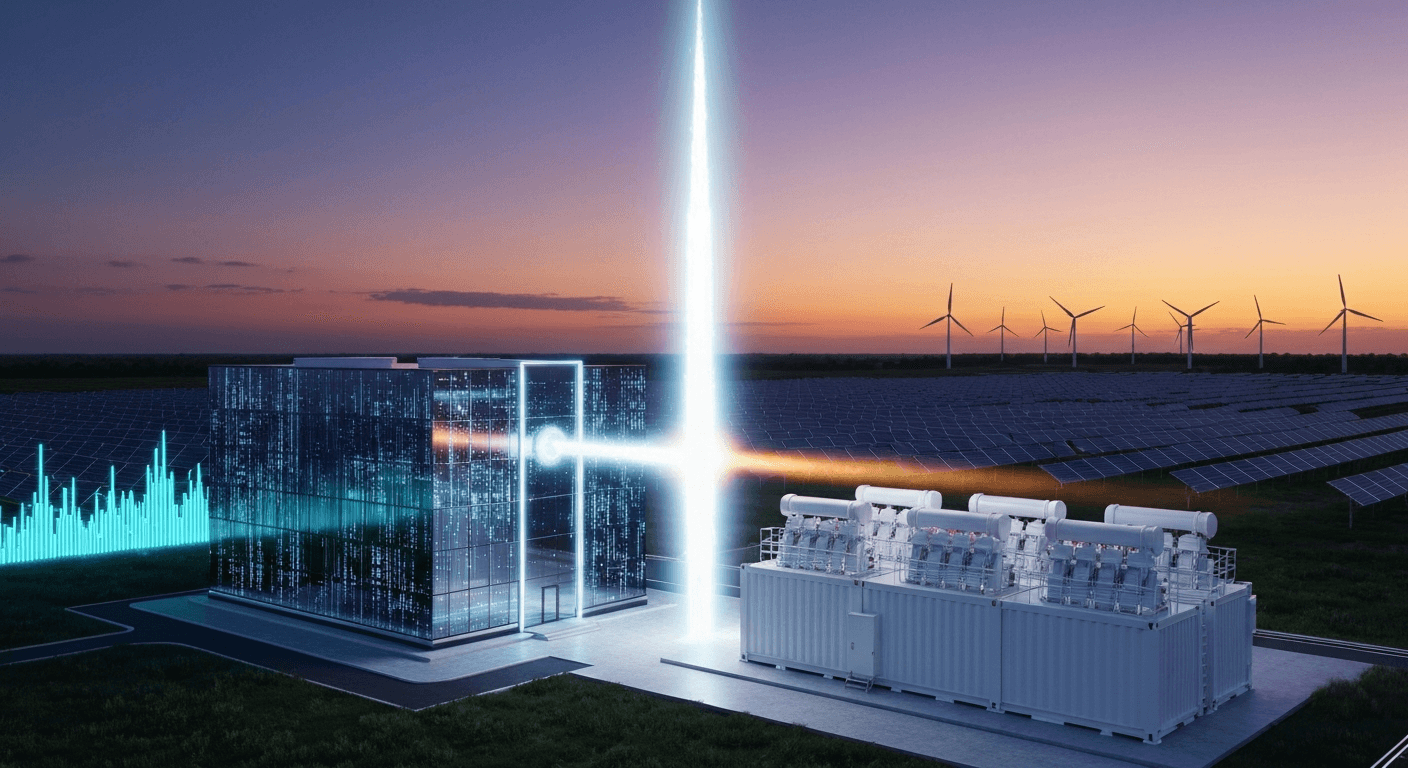
Solar generation peaks midday, creating a “belly.” As sun sets, net demand ramps up sharply.

Flexible Gas Fills the Gap
Solving the “Duck Curve” and Other Intermittency Challenges
The “Duck Curve,” a term coined by the California ISO, vividly illustrates the primary challenge of high solar penetration. It shows how net load (total demand minus renewable generation) plunges during sunny midday hours and then ramps up extremely steeply in the evening as the sun sets and people return home. This creates a deep “belly” and a steep “neck” that traditional baseload power plants cannot follow. Flexible gas generators are the perfect technical solution to this problem. They can reduce their output or shut down completely during the solar peak to avoid over-generation, and then start and ramp up at an extremely high rate in the evening to meet the sharp increase in demand. This ability to absorb the “shock” of renewable intermittency allows the grid to accommodate much higher percentages of solar and wind without collapsing, effectively acting as the grid’s suspension system.
Firming Wind and Solar PPAs to Guarantee Deliverable Power
Large corporations, including data center operators, are major buyers of renewable energy through Power Purchase Agreements (PPAs). However, a PPA is a contract for energy *as-generated*, which means the buyer is exposed to the risk of intermittency. If the wind doesn’t blow or the sun doesn’t shine, the data center still needs power. This is where flexible gas provides a “firming” service. By co-locating a flexible gas plant with a data center that holds a renewable PPA, the operator can create a synthetic, 24/7 carbon-free energy profile. When the renewable resource is available, the data center consumes it. When it is not, the flexible gas plant instantly starts up to provide the required power. This converts an unreliable, intermittent PPA into a firm, deliverable block of power that meets the data center’s stringent uptime requirements, thereby de-risking the massive investment in renewable energy.
Reducing Renewable Curtailment and Maximizing Grid Asset Utilization
In regions with high renewable penetration, a phenomenon known as “curtailment” is becoming increasingly common. This occurs when there is more renewable generation available (e.g., on a sunny, windy afternoon) than the grid can absorb, forcing grid operators to order wind and solar farms to shut down and waste clean energy. This happens because traditional baseload plants cannot ramp down quickly enough to make room. Flexible gas plants, with their ability to quickly reduce output, create the necessary “headroom” on the grid to absorb this excess renewable energy. By acting as a load sponge, they allow renewable assets to generate at their maximum potential, reducing curtailment, increasing the revenue for renewable project owners, and maximizing the utilization of valuable grid transmission assets. Every megawatt-hour of curtailed renewable energy that is instead enabled by flexible gas is a direct win for decarbonization.
Providing Essential Grid Stability: Inertia, Frequency Response, and Voltage Support
Beyond just providing energy, flexible gas generators contribute critical services that ensure the physical stability of the power grid. Traditional power plants with large, rotating turbines provide physical “inertia,” which helps resist sudden changes in grid frequency. As these plants are replaced by inverter-based renewables (solar and wind), this natural inertia is lost, making the grid more fragile. The rotating mass of reciprocating engines and gas turbines provides this essential inertia. Furthermore, their advanced control systems allow them to provide ultra-fast frequency response and voltage support, automatically adjusting their output in milliseconds to counteract grid disturbances. This is a vital ancillary service that batteries can also provide, but often for limited durations. Flexible gas provides these stability services for as long as needed, acting as a bedrock of stability upon which a renewable-heavy grid can be reliably built.
Section 5: Environmental Performance and the Decarbonization Pathway
Comparative CO₂ Emissions (kg/MWh)
Coal
~950
Diesel
~730
Flex Gas
~390
Renewables
0
Emissions Profile: A realistic Comparison to Coal, Diesel, and the Grid Mix
While natural gas is a fossil fuel, its emissions profile represents a dramatic improvement over incumbent technologies. A modern, efficient flexible gas plant emits approximately 50-60% less carbon dioxide (CO₂) than a conventional coal-fired power plant per megawatt-hour generated. The comparison is even more stark against the diesel generators traditionally used for backup power at data centers, which have significantly higher CO₂, nitrogen oxides (NOx), sulfur oxides (SOx), and particulate matter emissions. When a flexible gas plant is dispatched, it is often displacing a higher-emitting marginal generator on the grid, leading to a net reduction in system-wide emissions. Acknowledging its carbon footprint is essential, but it must be framed within the context of the available alternatives for providing firm, dispatchable power today. It is a significant step down the emissions ladder from coal and oil.
The “Bridge Fuel” in Practice: A Roadmap to Lower Carbon Intensity
The term “bridge fuel” is not an excuse for inaction but a strategic roadmap for progressive decarbonization. In practice, this means flexible gas plants are not intended to run 24/7. Their primary role is to enable renewables, and as such, their annual capacity factor and total emissions will decrease over time as more renewable energy and long-duration storage technologies are deployed. The initial phase involves using flexible gas to retire the most carbon-intensive coal plants. The second phase involves operating the gas plants only during periods of low renewable output, directly firming wind and solar. The final phase sees these assets transitioning to low- or zero-carbon fuels. This phased approach allows the energy system to decarbonize in a way that is reliable and economically viable, avoiding the instability that could derail the transition if dispatchable resources are retired prematurely.
Future-Proofing Assets: The Role of Hydrogen Blending and Renewable Natural Gas (RNG)
A critical aspect of the technoeconomic case for flexible gas is its ability to be “future-proofed.” Modern RICE and aeroderivative turbines are being designed with fuel flexibility in mind. Many are already capable of operating on blends of natural gas and carbon-neutral hydrogen (H₂), with manufacturers providing clear roadmaps to eventually run on 100% hydrogen as it becomes commercially available. This allows developers to invest in an asset today with confidence that it will not become stranded as the energy system transitions. Additionally, these plants can run on Renewable Natural Gas (RNG), or biomethane, which is captured from sources like landfills and agricultural waste. While RNG is currently a limited resource, it provides a “drop-in,” carbon-neutral fuel option that can be used today. This fuel flexibility provides a clear and credible pathway for the asset to evolve from a low-carbon to a zero-carbon resource over its operational life.
Navigating the Regulatory Landscape: Emissions Standards, Permitting, and Carbon Taxes
Deploying any thermal generation asset requires careful navigation of a complex regulatory landscape. Air quality permits, governed by the U.S. Environmental Protection Agency (EPA) and state environmental agencies, set strict limits on criteria pollutants like NOx and volatile organic compounds (VOCs). Modern flexible gas plants utilize advanced emissions control technologies, such as Selective Catalytic Reduction (SCR) and oxidation catalysts, to meet the most stringent standards, including Best Available Control Technology (BACT) requirements. The permitting process can be a significant timeline risk, and early and transparent engagement with regulatory bodies and local communities is crucial. Furthermore, developers must model the potential financial impact of future carbon taxes or other carbon pricing mechanisms. The economic viability of a project increasingly depends on its efficiency and its roadmap to transition to zero-carbon fuels, ensuring it remains a competitive asset in a carbon-constrained world.
Section 6: Risk Mitigation and Strategic Advantages for EPCs and Developers
De-risking AI Power Projects
⏳
Bypass Grid Queues
Accelerate time-to-market by generating power on-site.
⛽
Ensure Fuel Resiliency
Dual-fuel capability and on-site storage mitigate supply risks.
📈
Hedge Price Volatility
Cap electricity cost exposure by self-generating during price spikes.
🧱
Deploy Modularly
Scale power infrastructure in lockstep with data center build-out.
De-risking Project Timelines by Bypassing Grid Interconnection Delays
For Engineering, Procurement, and Construction (EPC) firms and project developers, schedule certainty is paramount. The single greatest risk to a data center project timeline today is the multi-year delay associated with grid interconnection. By deploying an on-site, behind-the-meter flexible gas plant, a developer can effectively disconnect their project’s critical path from the unpredictable and lengthy utility queue. This allows construction of the data center and its dedicated power source to proceed in parallel. The ability to guarantee a commercial operation date (COD) years sooner than a grid-dependent alternative is a massive strategic advantage. It allows the data center operator to capture market share and begin generating revenue faster, a financial benefit that can easily justify the entire capital investment in the on-site power plant.
Ensuring Fuel Resiliency: Dual-Fuel Capabilities and On-site LNG/CNG Storage
Reliance on a single fuel source or delivery method introduces risk. Modern flexible gas generation assets mitigate this through enhanced fuel resiliency. Many RICE and aeroderivative turbines are available with dual-fuel capability, allowing them to switch seamlessly between natural gas and liquid fuels like ultra-low-sulfur diesel. This provides a critical backup in the event of a natural gas pipeline disruption. For locations without direct pipeline access or for operators seeking even greater autonomy, on-site storage of Liquefied Natural Gas (LNG) or Compressed Natural Gas (CNG) is a viable option. An on-site LNG storage and regasification facility can provide several days of fuel supply, completely isolating the data center from pipeline pressure events or other upstream interruptions and ensuring continuous operation under even the most adverse conditions.
Mitigating Market Volatility: Hedging Against Power Price Spikes
For data centers connected to the grid, exposure to volatile wholesale electricity prices is a major operational risk. A heat wave, a major power plant outage, or a gas supply disruption can cause real-time electricity prices to spike from ~$30/MWh to over $1,000/MWh. An on-site flexible gas plant acts as a powerful financial hedge against this volatility. When grid prices are low, the data center can import power from the utility. When prices spike, the operator can start their on-site plant and generate power at a known, fixed cost determined by their gas supply agreement. This “optionality” effectively caps the data center’s maximum electricity cost, transforming an unpredictable operational expenditure into a manageable one. This ability to self-generate during high-priced periods provides significant economic value and budget certainty for the facility owner.
Modular Deployment: Scaling Power Infrastructure in Lockstep with Data Center Build-Out
Hyperscale data centers are rarely built to their full capacity on day one. They are typically built in phases, with new server halls and IT load added over several years. This phased approach creates a challenge for power infrastructure, which is traditionally built in large, monolithic blocks. Flexible gas generation, particularly RICE technology, offers a modular solution that perfectly aligns with this deployment strategy. A developer can install an initial block of generation (e.g., 50 MW) to support the first phase of the data center. As the next phase is built, additional generation modules can be delivered and commissioned in a matter of months, allowing the power infrastructure to scale in lockstep with the load. This “just-in-time” approach to power minimizes upfront capital expenditure, improves capital efficiency, and ensures that the power plant is always right-sized for the current needs of the facility.
Section 7: Case Study: Technoeconomic Model of a 200 MW Hybrid Data Center Power Solution
200 MW Data Center Power: A Comparative Analysis
Option A: Grid + BESS
Total Project Cost: ~$550M
Uptime Assurance: High (but limited by BESS duration)
Effective LCOE: High (~$110/MWh)
Timeline: 5-7 Years (Grid Queue)
Option B: Grid + Flex Gas
Total Project Cost: ~$220M
Uptime Assurance: Very High (fuel-dependent)
Effective LCOE: Moderate (~$75/MWh)
Timeline: 2-3 Years (On-site build)
Scenario Overview: A Hyperscale Campus in a Renewable-Rich but Congested Grid Region
Consider a new 200 MW hyperscale data center campus being developed in the Southwestern U.S. The region boasts abundant solar potential, but the local transmission system is highly congested, and the interconnection queue for new large loads is estimated at 5-7 years. The developer has a corporate mandate to procure renewable energy but requires 99.999% uptime from day one. The goal is to find the most time-efficient and cost-effective solution to bridge the gap until a full grid upgrade and a dedicated utility-scale solar project can be brought online. We will analyze two primary options to meet the reliability requirement.
Option A Analysis: Grid Supply + Utility-Scale Battery Energy Storage System (BESS)
In this scenario, the developer applies for a 200 MW grid connection and co-locates a large-scale BESS to ensure reliability. To provide meaningful backup during multi-hour grid outages or lulls in renewable generation, a BESS with at least 4 hours of duration is required, resulting in a 200 MW / 800 MWh system.
* CapEx: A utility-scale BESS of this size would cost approximately $350-$450 million. The grid connection and substation upgrades would add another ~$100 million. Total CapEx: ~$550M.
* Timeline: The project is hostage to the 5-7 year grid interconnection queue.
* OpEx: The BESS must be charged from the grid, exposing the operator to wholesale market prices. Battery augmentation (replacement of degraded cells) over the project’s life adds significant lifecycle cost.
* Reliability: While effective for short-duration outages, the BESS offers no protection against a multi-day event (e.g., a regional blackout or storm) once its 4-hour charge is depleted.
Option B Analysis: Grid Supply + On-site Flexible Gas Generation Plant
In this scenario, the developer builds a 200 MW on-site flexible gas power plant using RICE technology, while also contracting for renewable energy from the grid when available.
* CapEx: A 200 MW RICE plant would have an installed cost of approximately $200-$240 million. A smaller grid connection for supplemental power and a gas pipeline connection are also required. Total CapEx: ~$220M.
* Timeline: Since the plant operates primarily behind-the-meter, it bypasses the main interconnection queue. The project can be permitted and built in 24-36 months.
* OpEx: The plant would run primarily during periods of high grid prices or when renewable output is low. The operating cost is a known function of gas price and plant efficiency, providing a hedge against market volatility.
* Reliability: With an adequate fuel supply (pipeline or on-site storage), the plant can run indefinitely, providing true long-duration protection against any grid failure and guaranteeing uptime.
Comparative Results: Total Project Cost, Uptime Assurance, LCOE, and Carbon Footprint
Comparing the two options, Option B (Flexible Gas) is superior across most technoeconomic metrics for this near-term bridging application. It has a CapEx that is less than half of Option A. It delivers a project timeline that is 3-4 years shorter, representing a massive acceleration in time-to-revenue for the data center. While Option A has zero on-site emissions, its “all-in” Levelized Cost of Reliability is significantly higher due to the massive BESS capital cost. Option B has a manageable carbon footprint (as it operates only part-time) and offers a much higher degree of long-duration uptime assurance. The on-site plant provides a path to full decarbonization via future conversion to hydrogen or RNG, mitigating the risk of it becoming a stranded asset.
Key Takeaways for Project Feasibility and Financial Modeling
This case study demonstrates that for AI-scale projects facing grid constraints, on-site flexible gas generation is not just a viable option but often the most pragmatic and economically rational choice. Financial models for data center power infrastructure must move beyond a simple LCOE comparison. They must incorporate the immense financial value of schedule acceleration and the cost of avoided downtime (LCOR). The ability to de-risk a project from the uncertainties of grid availability is a strategic advantage that fundamentally alters the feasibility analysis. For developers and their financial backers, the flexible gas option provides a faster, cheaper, and more reliable path to energizing the infrastructure that powers the AI revolution.
Conclusion: A Pragmatic Imperative for the Digital Age
Flexible Gas: The Enabler’s Checklist
✔ Guarantees 99.999% Uptime
✔ Accelerates Project Timelines
✔ Enables Deeper Renewable Penetration
✔ Provides Lower LCOR vs. Alternatives
✔ Offers a Clear Path to Decarbonization
Summarizing the Technoeconomic Advantages of Flexible Gas Generation
The technoeconomic case for flexible gas generation as a bridging solution for the AI era is compelling and multi-faceted. It offers a lower capital expenditure and a more favorable Levelized Cost of Reliability compared to renewable-plus-storage solutions aiming for the same “five nines” uptime. Its key strategic advantage lies in de-risking project schedules by bypassing protracted grid interconnection queues, enabling data center operators to get to market years faster. Operationally, it provides an essential hedge against electricity price volatility and generates ancillary revenue streams, strengthening the project’s financial profile. Technically, it is the ideal partner for intermittent renewables, solving the “Duck Curve,” reducing curtailment, and providing the critical grid stability services like inertia and frequency response that are essential for a reliable, clean grid. This combination of economic pragmatism, operational agility, and technical synergy makes it a uniquely powerful tool for meeting the present challenge.
The Decarbonization Pathway
Today
Natural Gas + Renewables
Interim
H₂ Blending / RNG
Future
100% Green H₂
Positioning Flexible Gas as a Strategic Enabler, Not an Obstacle, to the Energy Transition
It is imperative to shift the narrative around flexible gas. It should not be viewed as an obstacle to the energy transition, but as a crucial strategic enabler of it. Without a firm, dispatchable, and fast-acting resource to guarantee reliability, the pace and scale of renewable energy deployment will be severely constrained. By providing the essential “firming” and stability services, flexible gas allows the grid to absorb significantly higher penetrations of wind and solar power, accelerating the retirement of coal and reducing overall system emissions. The pathway to future-proofing these assets with hydrogen and RNG demonstrates a commitment to long-term decarbonization. To reject this pragmatic tool on ideological grounds is to risk slowing the transition and jeopardizing the grid stability needed to power our increasingly digital economy. It is the scaffolding that allows us to build a taller, cleaner energy structure for the future.
Your Next Move in the AI Energy Era
The data is clear: on-site, flexible generation is a critical component for successful AI infrastructure deployment. To build your own technoeconomic models and stay ahead of market trends, you need access to the best data.
A Call to Action for Engineers, Developers, and Facility Managers in the AI Era
The challenge of powering the AI revolution is immediate and immense. For the engineers designing these complex systems, the developers financing them, and the managers operating them, the time for a pragmatic re-evaluation of power strategy is now. Relying solely on a strained grid or an incomplete renewable-only solution introduces unacceptable levels of risk to timelines, budgets, and operations. The technoeconomic analysis overwhelmingly supports the integration of on-site, flexible gas generation as the critical bridging technology. It is a call to embrace a hybrid approach that balances the idealism of a fully renewable future with the realism of today’s infrastructure constraints. The task ahead is to build the digital future reliably, affordably, and sustainably. Flexible gas generation, used strategically and with a clear path to decarbonization, is an indispensable tool to get the job done.